Hosted storefront UX · case study
A hosted school store made to feel intentional before the product grid.
Families enter through a branded school experience that points them to the right apparel, sizing information, and ordering details before they reach the product grid.
Storefront presentation completed within Data Graphics' client-services workflow.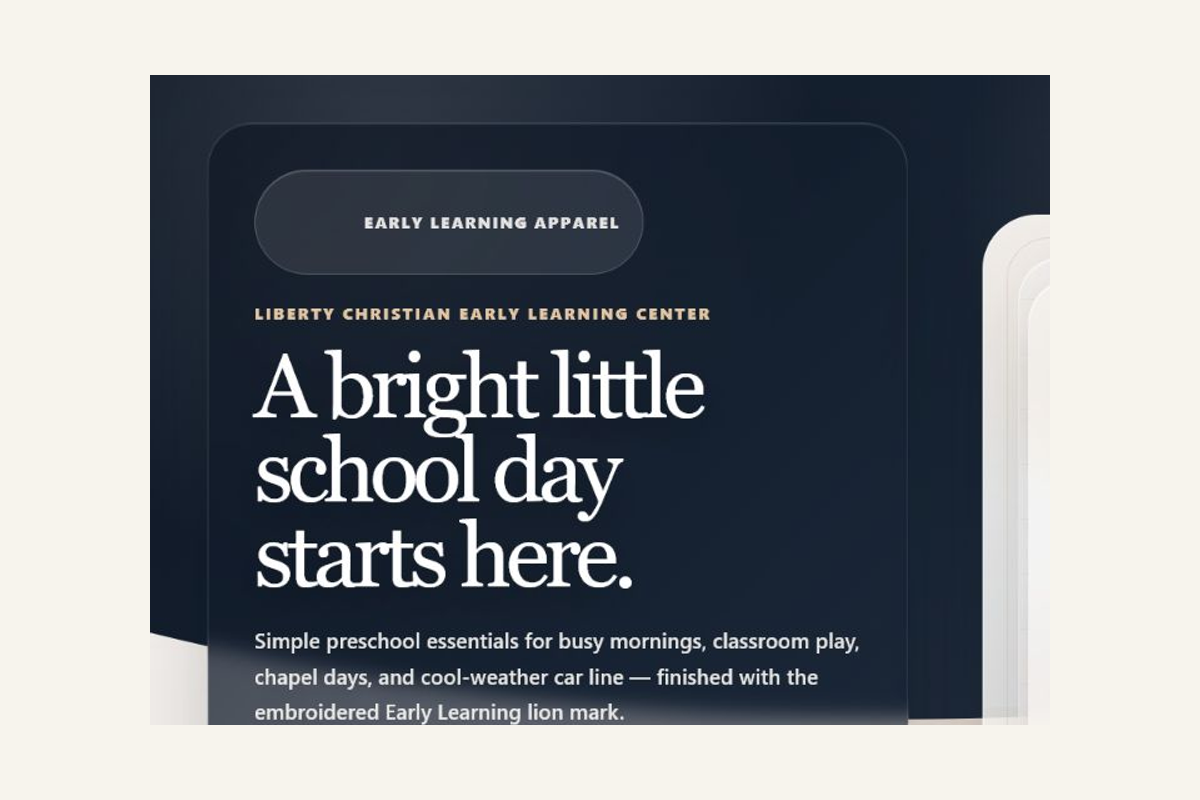
Public storefront view captured July 11, 2026. The underlying ordering platform remains InkSoft.
Context and problem
Families needed an official path into everyday school apparel.
A default hosted-store entrance can make every product feel equally important. This project needed a warmer opening, visible category choices, product guidance, deadline and pickup context where relevant, and mobile behavior that still makes the first decision easy.
What the project included
Within Data Graphics' client-services workflow, the project brought together storefront strategy, interface development, production-aware content, Cloudinary-backed assets, clearer product paths, and responsive behavior for restrictive hosted pages.
Brent contributed storefront strategy, interface development, operational context, and implementation as part of that broader client-services workflow.
What changed
The public store now opens with a deliberate branded entrance instead of asking shoppers to interpret a generic catalog first. The interface points families toward polos, layers, and sizing guidance while leaving product, cart, and checkout behavior with the platform.
Platform constraint
The custom entrance works inside InkSoft. It improves the path into the catalog while InkSoft continues to handle products, accounts, cart behavior, and checkout.
Result
Families reach a branded school-store entrance with clearer product paths, sizing guidance, and ordering context before they enter the catalog.
Next opportunity
Review product-level analytics and recurring customer questions before deciding whether the store needs additional guidance.
Discuss a related project